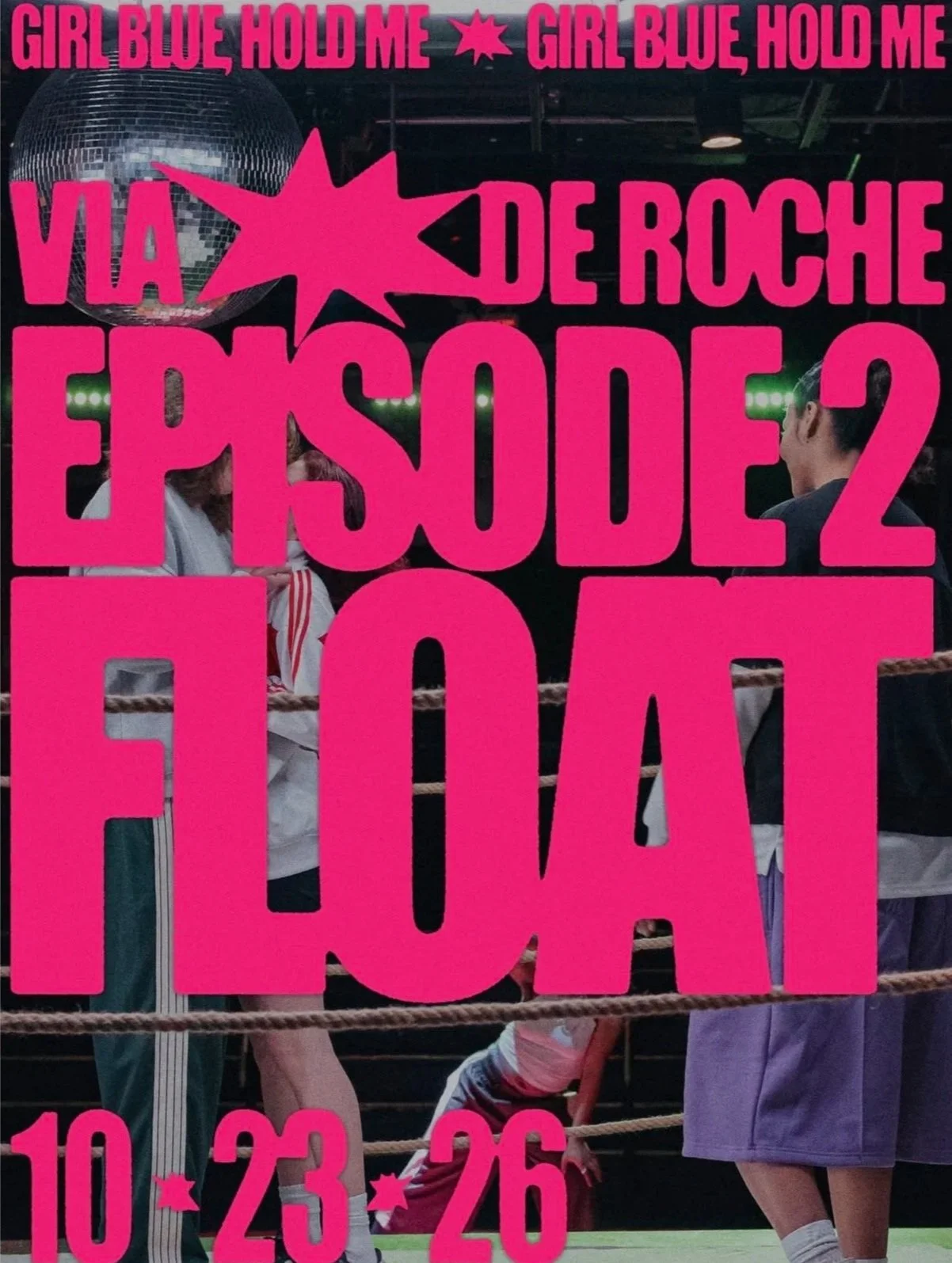
Via DeRoche Has A Vision: Episode 2 Releasing This Friday!
If you follow women’s sports–if you don’t, get on it!–you probably know who WNBA players TP and Syd Colson are. And if you’re tapped into the internet at all, you may have seen Via DeRoche’s Episode 1 of her genre bending music video x short film series release for her upcoming EP Girl Blue Hold Me. I was lucky enough to be on set while they shot all six episodes, and ahead of the long awaited Episode 2 (releasing THIS FRIDAY!) I sat down with Via DeRoche to talk about her process and the vision behind it all.
You can watch the first episode HERE if you haven’t seen it yet. If you’re like any of the other 12k people who viewed and loved the first video, you’re going to be on the edge of your seat waiting for Episode 2!
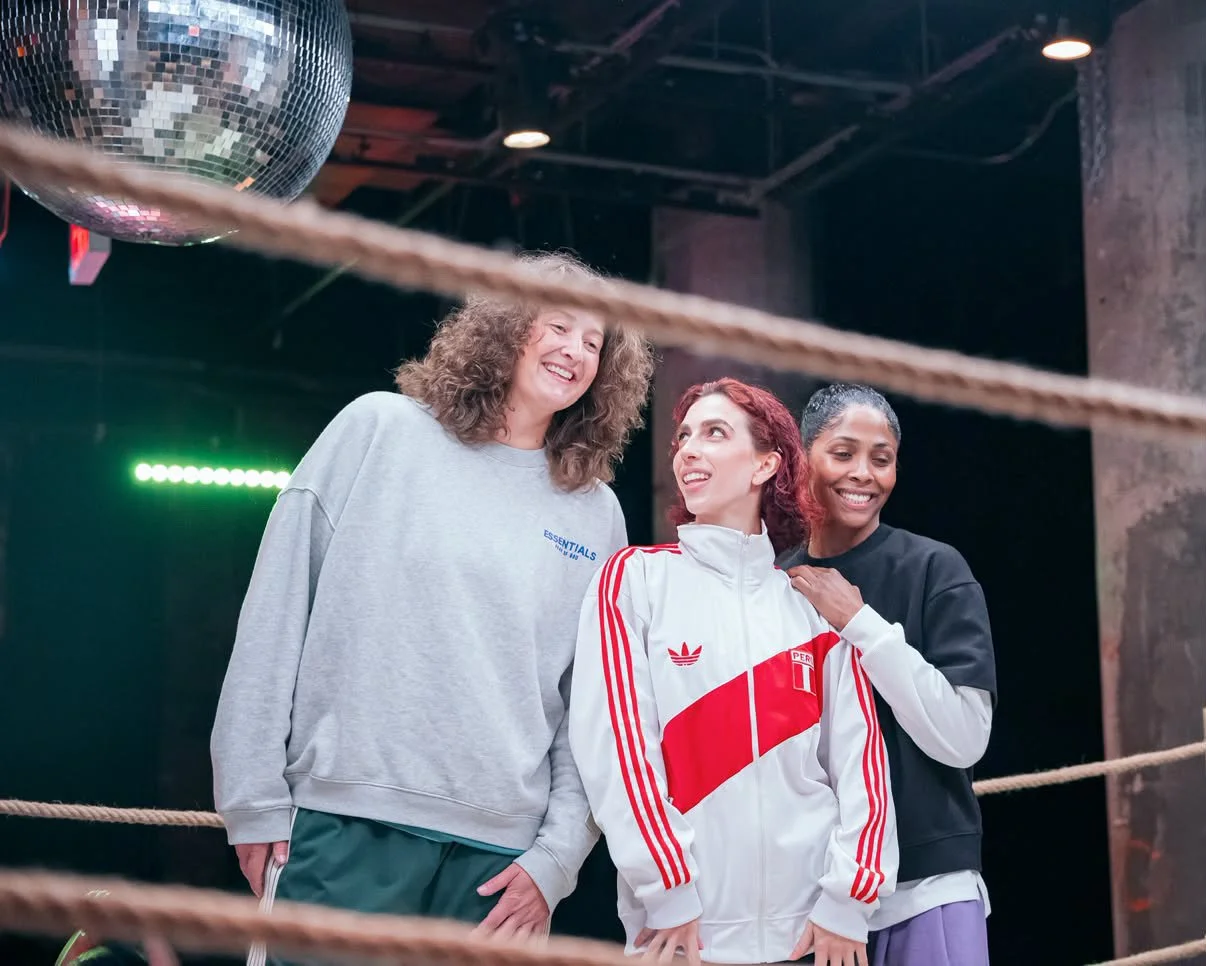
Photograph courtesy of Via DeRoche
First of all, seeing you, Syd, and TP act was so fun! Was that your first time going into the acting side of things?
No, I actually grew up as an actor, and then I decided to pivot to music. Just because, in all honesty, I love to write and act. I grew up doing musical theater, but I didn't really want to come to New York doing musical theater because it's just such an uphill battle, such a grind. I had written a play years ago, that kind of loosely is the same plot line, so I started just matching it to the songs and was like, well, I could try and build it out and then have an acting reel by the end if I have enough dialogue. So I basically just conjoined a version of the play and then the songs and just kind of rewrote it as its own little thing.
I feel like that shows that you've had a very cohesive image for a while because you had this idea, that's this amazing lesbian boxers club, and then their songs, which like went along so perfectly for it, for each scene. I remember when I was on set, I was like, how does this go so well?
That was really on accident. I remember I was visiting Syd right after she got injured. And she was like, “Via, one day I want to do a movie with you where we're like running away in slow-mo.” I was like, “that would be so sick," and then I was thinking about it; her favorite song is, Oh, please, and the songs have been ready for over a year. I just knew I really wanted to make this visual. And so she's playing, Oh, please, and saying this. And I was like, “wait, that might work”. then I remember I got home from that trip and I was like, “I think actually, weirdly, these songs go with this storyline.” It was just one of those coincidences where I was like, “okay, this thing I wrote at this time and this thing I wrote at this time will just kind of match up.”
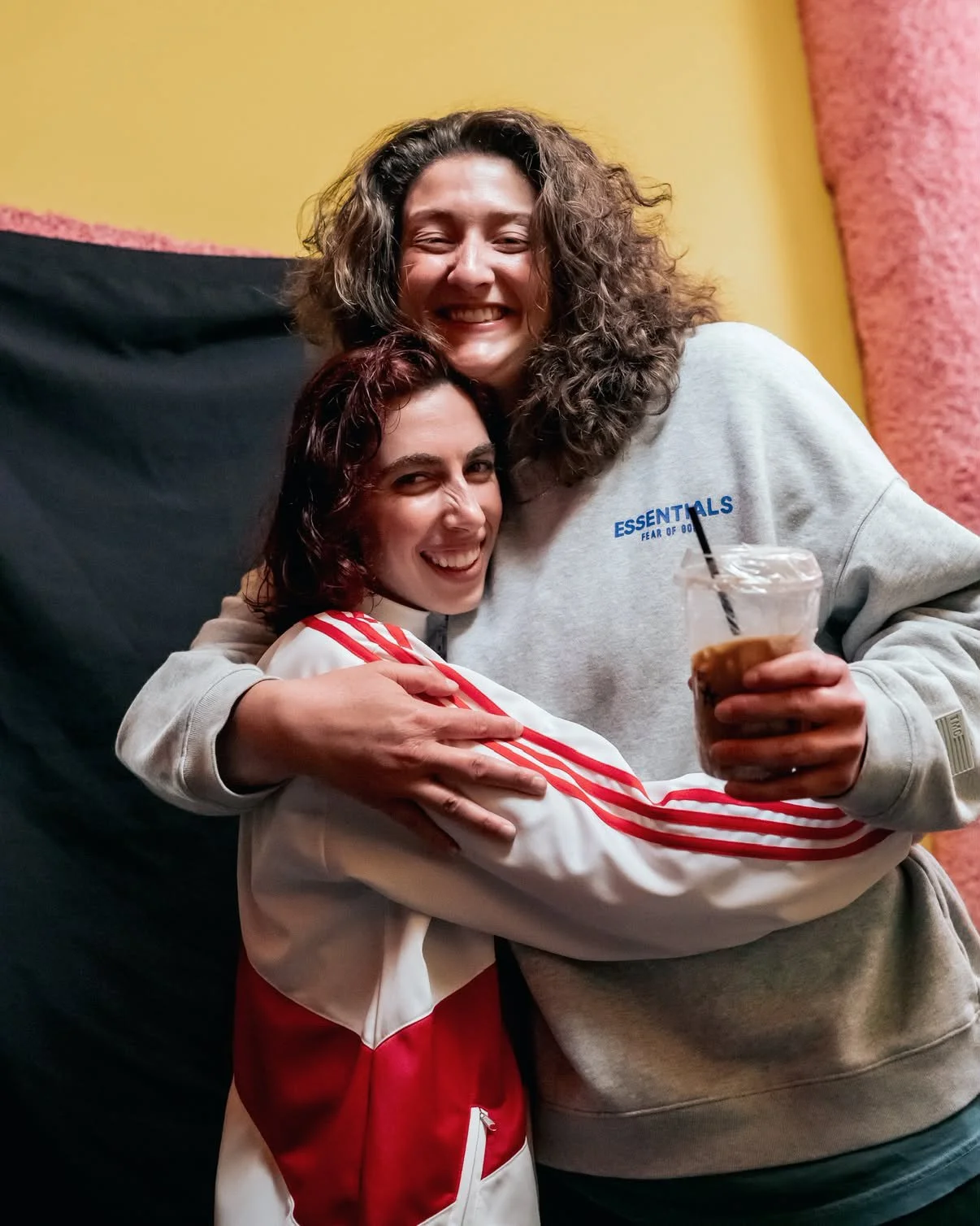
Photograph courtesy of Via DeRoche
Yeah, and out of the ones that you've released so far, which were Float and Hope You Don't Hear This– you know ‘float’ is a term that people use in boxing.
It's so crazy. I didn't clock it until 2 weeks ago. I literally was editing it, and I see on my Pinterest–because obviously my Pinterest is all boxing now– “float like a butterfly sting like a bee,” and I was like, “ding, ding!” It's, like, so much of it just comes together when it's supposed to, because so many of the things that brought it to fruition, I was not clocking. And it was kind of that thing where I think we all got to set, and we were like, “okay, it's going to work,” like, “this weirdly works here.” So I feel like that’s part of it too, but that was pure coincidence, which is hilarious to me now.
Photograph courtesy of Via DeRoche
It is, but I feel it's also what happens you have that consistent vision, and this story is something that was very true to yourself too, that it's gonna come together once you're authentic to that. So that's really cool.
Totally, and I think especially when you have the right people, because I think I tailored so much of the story to my real life experience with Syd and TP. I was never in the sports world, and them kind of bringing me into the sports world has just created some of the best friendships and queer community that I've had. So it was fun to have that trickle down to when I was rewriting the story to fit the music. As I feel like it still has enough fictional narrative where it was so fun to act, because it was so dramatized. But it also felt very true to the people I was making it with, which was really nice. And I felt like it’s why it kind of was– I mean, you were there–it was a warm and fuzzy [film] set.
Yeah, it was very fun. And an all-women [film] set too! It was perfect.
Well, I think that felt really special because, weirdly enough, the [film] set I met Syd on was the first set I had been on with a queer director. It had mostly queer people working it, mostly women working it, and I'm sure that's part of the reason also why we were able to hit it off so well is [because] we were so comfortable on that set. So it was cool, but that is really the only other time I've been on a [film] set like that and that's where I met Syd. It's kind of full circle in that way. I feel like I've watched it enhance every set that I've been on and is something I really take to heart because I'm never “talent” when I'm on set. I'm usually always a stylist. So especially watching her do that now, just the way that I've brought that onto sets now, where I make sure I say “hi,” to everyone. You get so much more from set when you are the person who says “hi,” to everyone.
It's weird to hear you say that you are never “talent” because my experience with you is you are “talent,” director, creator, everything! How was that for you as a change?
“You can literally do whatever the fuck you want if you are able to get the right people and save enough money. I’ve always thought of it as someone would have to say yes in order for me to make something that big, and that just wasn’t the case. We literally just made it.”
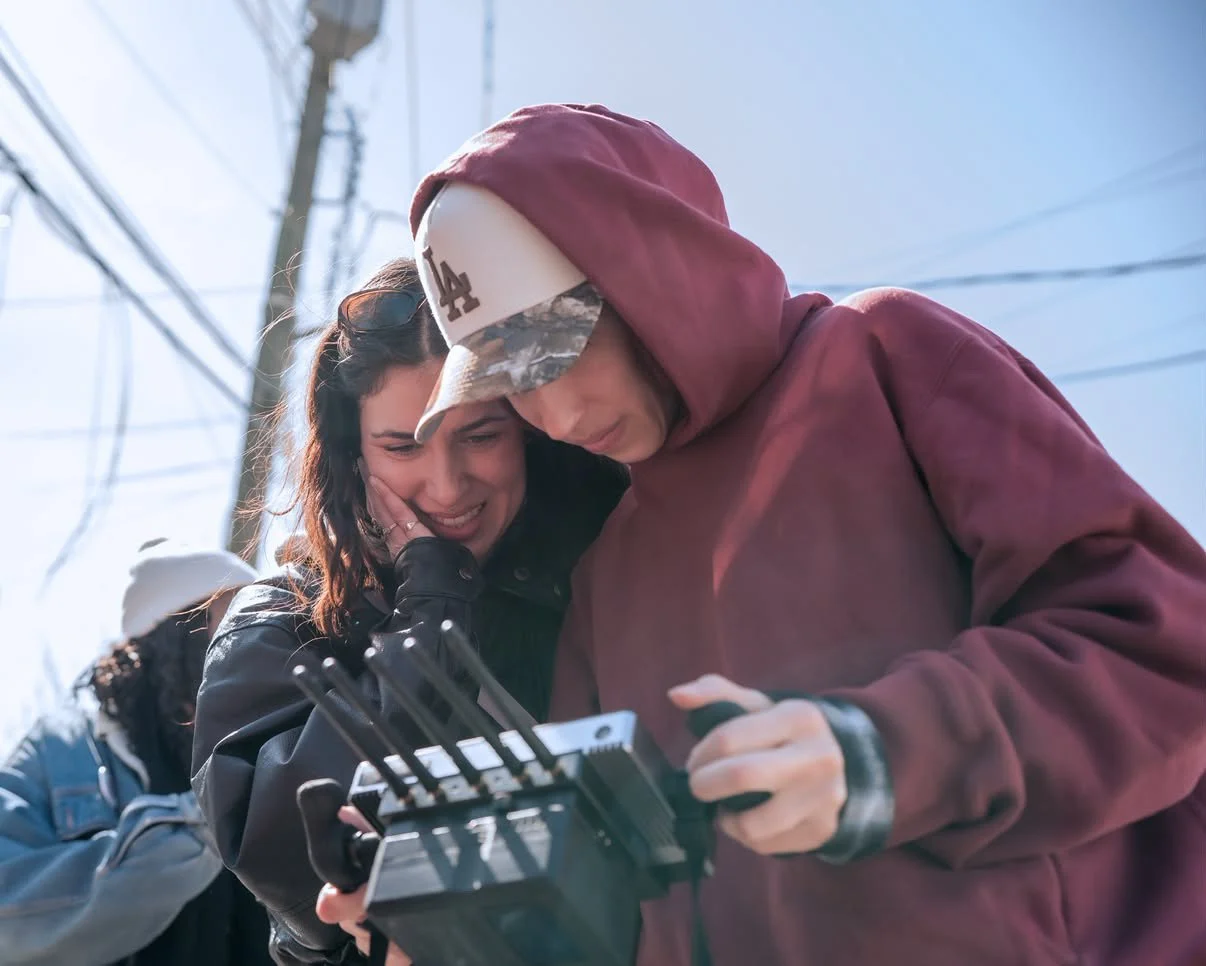
It was really deeply fulfilling, for sure. Because I think, and you're a writer, so you might understand this too, it's so rare that you get to really bring the stuff you write to life, just because of the amount of money and time it takes. So I think, as a first step, that was crazy. When I just walked in and saw the scale, I literally was like– the joke on set with me and my close friends that were there– we were like, “you guys, I made this up in my head.” And now people are actually working on their ships and making it happen. But I think just being able to, because I've never directed before, so I was really grateful that I had a co-director in Sharik [Geneve], because I've just never done anything this big. We really just kind of pulled it out of nowhere, and got lucky in finding the right people, and I'm very lucky. I saved half the budget, and then I raised the other half just from friends and family, and like a GoFundMe, essentially. So, it's pretty remarkable that we were able to pull it off. We had to get lucky so many times to get someone's $5, you know what I mean? By the time I got there too, I was like, “oh, fuck, now I have to act.”
And you put so much work into it beforehand—that was so evident on set too.
Yeah. I think it's very crazy, it just was such an insane, surreal experience when we were actually doing it. It just also was me being like, “damn,” you can literally do whatever the fuck you want if you are able to get the right people and save enough money. I think I've always thought of it as someone would have to say yes in order for me to make something that big, and that just wasn't the case. We literally just made it. It's so bizarre.
Well, and you said yes to yourself is what it came down to.
Which I think was the biggest thing too. I think, as a creative, especially when you're just hustling so much to survive in New York, just making rent is hard. To be able to fully execute something that you wanted to execute has been such a level up for me, just with myself, because you can just make your art if you commit all the time in the money to it. Also, I think I'm very lucky that at this spot in my life, I was able to do that, especially with the job I have. I was able to save pretty much all of this in two years, which, for me, that's not normal. I just happened to get the right job at the right time, meet the right people at the right time. But I think it's cool to now look at it and be like, “damn, I wrote it, and I'm in it, and it's my music, and I helped direct it.” It’s very surreal.
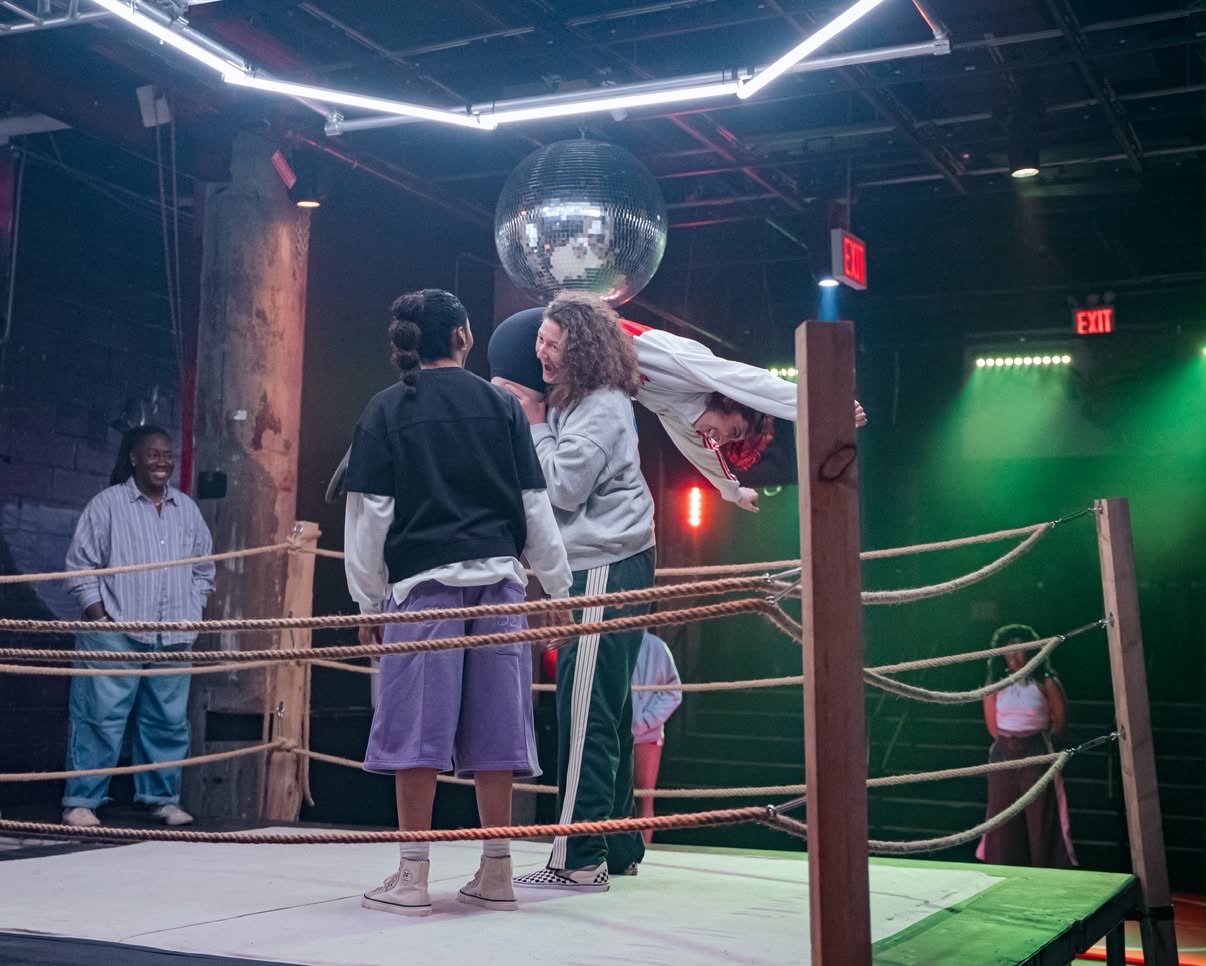
Photograph courtesy of Via DeRoche
Well, and that came from the steps of you also saying yes to writing your music in the first place because it wouldn't have become anything if you didn't have the songs to back it up.
Totally. Even that was such a crazy experience because so much of this whole project was me just telling people the idea. Like, people I don't know, and just cold emailing everyone the songs and the idea. And that's really how we got pretty much everything.
You just have to ask sometimes and people will say yes, but you have to just like send the 100 emails and the 100 DMs.
Are you planning on playing live shows?
Well, I've had musicians who I play gigs with. But I think now that I have a set project, I'm on the hunt to build out an all queer band or like all female band. I would love just, like, a whole band of mascs. We'll see what we can do. But that's been something I'm thinking about a lot too is, now that we have all of this, what kind of show can we build?" So that definitely feels like the next step. Like, okay, these visuals are almost done. Now what will all the live stuff look like? That is a huge goal of mine. I think it was so incredible to have such a queer female set. I'm like let's now apply that to all aspects of this and get a band. Kind of just have that be the precedent for the stuff I do.
I just want to talk a little bit more about your music. So you, you're not just a singer, you're a writer, and you wrote all these songs. What was the core idea of this album or the feeling that you think you were trying to bring through in each of these songs?
I think, for me, these songs were almost a very pivotal point in time. A time of leaving behind and then stepping into. And a lot of it was, I think, dealing with kind of stepping into your queerness in a way that almost has to leave behind some of what you grew up with. So much of “Hope You Don't Hear This,” which I always knew would be the first song, is that battle of: in order to be honest, you almost have to ruffle some feathers. So, really, at the end of the day, I was like, “if I'm gonna be able to write this music, actually, the first thing I want to say is there are a lot of people I hope don't listen to it. I specifically would love to not hear this so that I can be honest.” And so I think each song as it progresses, gets like a little more true, like “Float” started out as the most depressing song on earth. If you listen to the lyrics, it's actually so sad and it's about literally being so depressed, you don't know if you can go on. We decided to put it to a disco beat to kind of hide in plain sight. So it's like, once we have the crescendo of “Hope You Don't Hear This,” we hide in plain sight musically for a bit. And at the end of “Girl Blue,” if you listen closely, the musical elements start to decompose a bit so that when, “Oh, Please” starts, it all is distorted. It has a sense of conflict. The one that is the clearest with composition is the last song. Musically, we were really intentional about being a little more honest with the emotional trajectory. Lyrically, you almost can pivot and vocally hide meaning, but we kept the composition really true to the narrative of feeling.
I know queer identity plays a really big role in your music. Are there any queer artists that you look up to or that you would say your sound is inspired by?
I would say– it's not confirmed that she was queer, but she was queer– Donna Summer for me is huge. I think whether she was queer or not, her influence in queer clubs, what she brought to gay culture at that time is so foundational to a lot of our fashion, to a lot of our aesthetic. She's always been someone that is a real anchor point for me. I always come back to her no matter what kind of project I'm writing. I think vocally and with her artistry, there's a really heavy anchor there. But there's so many queer artists I love right now. I was going through a big Katie Lang phase when I was writing this, and you can kind of hear it a little bit of that in “Oh, Please.” I went a little twangy, especially in the first demo. Janice Joplin, Nina Simone, and then Etta James. They all covered the song, “Little Girl Blue.” For me, they are my vocal holy grail. I think when I was learning to sing rock, it was all Janice. Growing up, it was all Nina and Etta, just because I loved musical theater. I loved jazz. So a lot of that started with just listening to their covers of “Little Girl Blue” on repeat, and then that's what “Girl Blue Hold Me” came from. [It] was me just being like, “I'm stepping into something new, who are the women I would anchor myself to, or speak to, or ask for spiritual guidance?” That was how “Girl Blue Hold Me” started.
[Nina Simone] is just so phenomenal. I think her and Lauren Hill–I listen to her MTV unplugged a lot because she just talks through each song and the artistry behind it and the spiritual pull behind it. That is something I had on repeat a lot after I wrote everything, and I was thinking about how I wanted to go about bringing them to life, performing them. That was kind of my Bible of building out something that felt true to my artistry even thought it’s not so appealing, maybe, to a lot of music industry people. They love it now that it's made. People think it's the coolest idea ever, but most industry people I was talking to were trying to get support from, they were like, “there's no point in long form, there's just no point.” So I think it was important for me to remember that I'm trying to build something, an artistry, and it's okay if it takes a little longer for the career steps, but I think fulfilling the world-building vision I saw for this was really important and just required a lot more patience. I feel like Lauren Hill speaks about that all the time, so that was definitely someone–I was listening to all her interviews, any I could get my hands on– that was important while I was kind of figuring out how to go about it all.
I think you can plainly see that this is something that was completely authentic. I really haven't seen anyone else do this, having the acting and a storytelling around it. I'm really, really excited to see all the episodes come out. I can't wait.
It's so cool to hear you identify all those things that, to me, live so in my brain and the fact that we are able to convey some of it is so awesome, but it’s such a learning curve too. It's definitely been the craziest learning curve of all time. I would remind myself, “we're not flopping, it's just a learning curve.” But now we know what to do differently. I also wrote that script so long ago that sometimes when I do hear it, I'm like, “I might edit that now, I might change that.” So I think part of it too, is having to just allow it to be a timestamp of who I was when I wrote it, and let it encompass what it encompasses. Let it be its own thing a little bit, too.
Photograph courtesy of Via DeRoche