Why Are We Obsessed with “Obsession?”
[Don’t be afraid… this is SPOILER FREE]
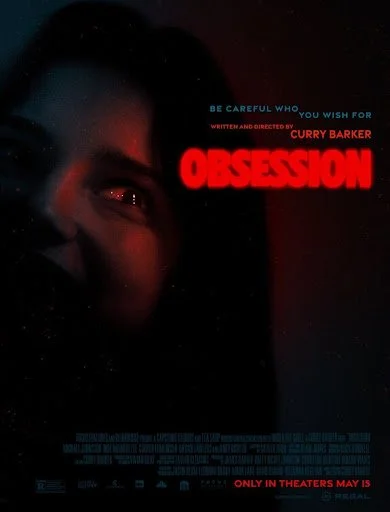
Obsession has hooked movie-goers since its theatrical debut on May 15th. Jarring, funny, and absolutely horrific, this relentless horror film is proving to be one of the most successful, iconic modern horror movies. In fact, Obsession has had a record-breaking, rare box-office run so far, making $17.1 million in its first weekend and $22.4 million in its second! Looks like the world is obsessed with Obsession. Why? What makes this film so special?
The film follows a music store employee, Bear, who has long yearned for his childhood friend, Nikki, yet lacks the courage to confess his feelings. After a long night of fumbling, a defeated Bear uses “novelty” wishing sticks to wish for Nikki to love him “more than anyone in the world.” Novelty is in quotations because, it turns out, the sticks are absolutely real, of course. Indeed, One Wish Willow grants the user’s desire in an instant, with perfect alignment to the wish’s phrasing.
Nikki is immediately conquered by overwhelming love for Bear–no, Obsession. Her identity is reduced to merely a being dedicated to loving and serving Bear. Nothing else is important to Nikki, now. Nothing, nothing, nothing, nothing will get in the way of her and her beloved.
This all sounds familiar, right? Tales where people face the consequences for their wishes granted by magical or supernatural means? The Picture of Dorian Gray, Black Swan, and Disney’s 16 Wishes come to mind. Media across the ages have used Pandora’s Box, genies, magical objects, and more to depict the catastrophes that can result from such entities. Curry Barker, the movie’s writer and director, took the warning “be careful what you wish for” and turned it into one of horror’s greatest films in recent memory.
Obsession shines in its visual and auditory storytelling, and foreshadowing, minute details that culminate in the film’s shocking conclusion. Every scene is steeped with tension. From the moment Bear’s spell activates, Nikki is transformed into a terrifying, unsettling, unpredictable being. Barker’s use of the uncanny, along with Inde Navarrette’s portrayal, deprives the audience of relief.
The film utilizes framing, lighting, and editing to unnerve the audience. We are trained to associate open backgrounds behind characters, dark corners, and still moments with suspense. Will Nikki be lurking in the corner this time? What is she doing? Is she actually asleep? No scene is safe.
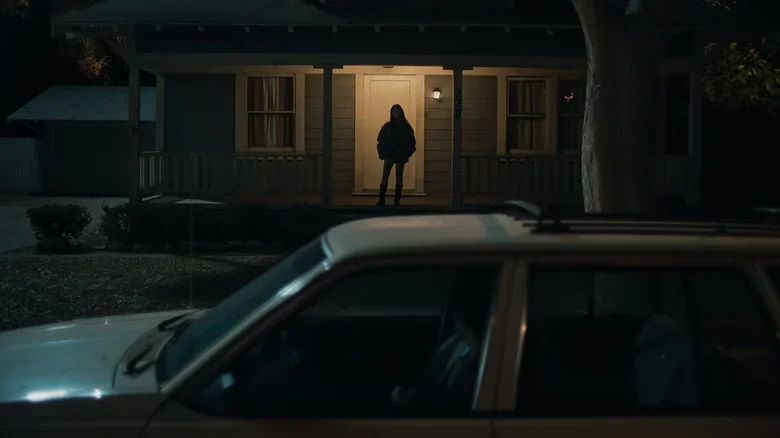
Still via Focus Features
The editing piles onto the framing’s impact, notably through Nikki’s movements. For example, there is a scene where Nikki is moving around all crazy in the dark. A person standing in the corner at night, when you don’t expect it, is startling enough, but what if she was also moving inhumanely fast? Spider-like, even? What if she also moved really slowly at one point, to throw your expectations? Very frightening. On top of that, Navarrette was made up to appear especially terrifying in the shadows, with deep shading on her smile lines, lips, and eyes. The makeup made her mouth look slightly longer, her eyes slightly larger and darker, and her face more grave. These choices, while shooting and in post-production, made the scene all the more scary.
There’s one thing I think people aren’t talking about enough: the soundtrack! Yes, Obsession is visually very uncomfortable and well-written, but the music does a lot of heavy lifting in horror that can be easy to overlook. Rock Burwell composed the soundtrack for Obsession, marking his debut as a composer in a feature film. It is about 45 minutes long and perfectly encapsulates the film’s atmosphere. It’s romantic and reflective at times, with a soft orchestral motif that feels tender and gentle. Then, loud, intense electronic sounds, paired with trembling string instruments, burst that bubble, reminding the audience that, no, this is not a love story. It’s a nightmare. Burwell executed a track that reflects Obsession’s tension, paranoia, and confusion. His control over dynamics, themes, and understanding of the movie’s atmosphere intensify the horror, the cherry on top of Curry Barker’s gripping cinematic debut.
Obsession is a rollercoaster of a horror movie: you laugh, scream, and endure intense dread all in one go. Barker presents the story with familiar characters and settings– a friendship trio, trivia night at a bar, a party with drunk Jenga, a local music store– and integrates the uncanny and horrifying in both overt and covert ways. The obvious horror tropes entertain you in theaters, while the less obvious details and themes haunt you on the drive home. At night, while you eye that dark corner in your room, you can’t help but think about Nikki, the Nikki trapped in a man’s wish, scared to fall asleep.