
Interpol’s “This Mirror Weighs A Ton”: Talking Through The Band’s Experimental Sounds and Modern Concerns
In their new album, This Mirror Weighs A Ton, Interpol experiment with bringing new sounds and conversations to the forefront of their music. Throughout the record, we get glimpses of different instruments and vocals, letting us see the band in a new light. They explore heavy themes in this one, ranging from family and relationships, to the rise of AI and wars happening across the globe.
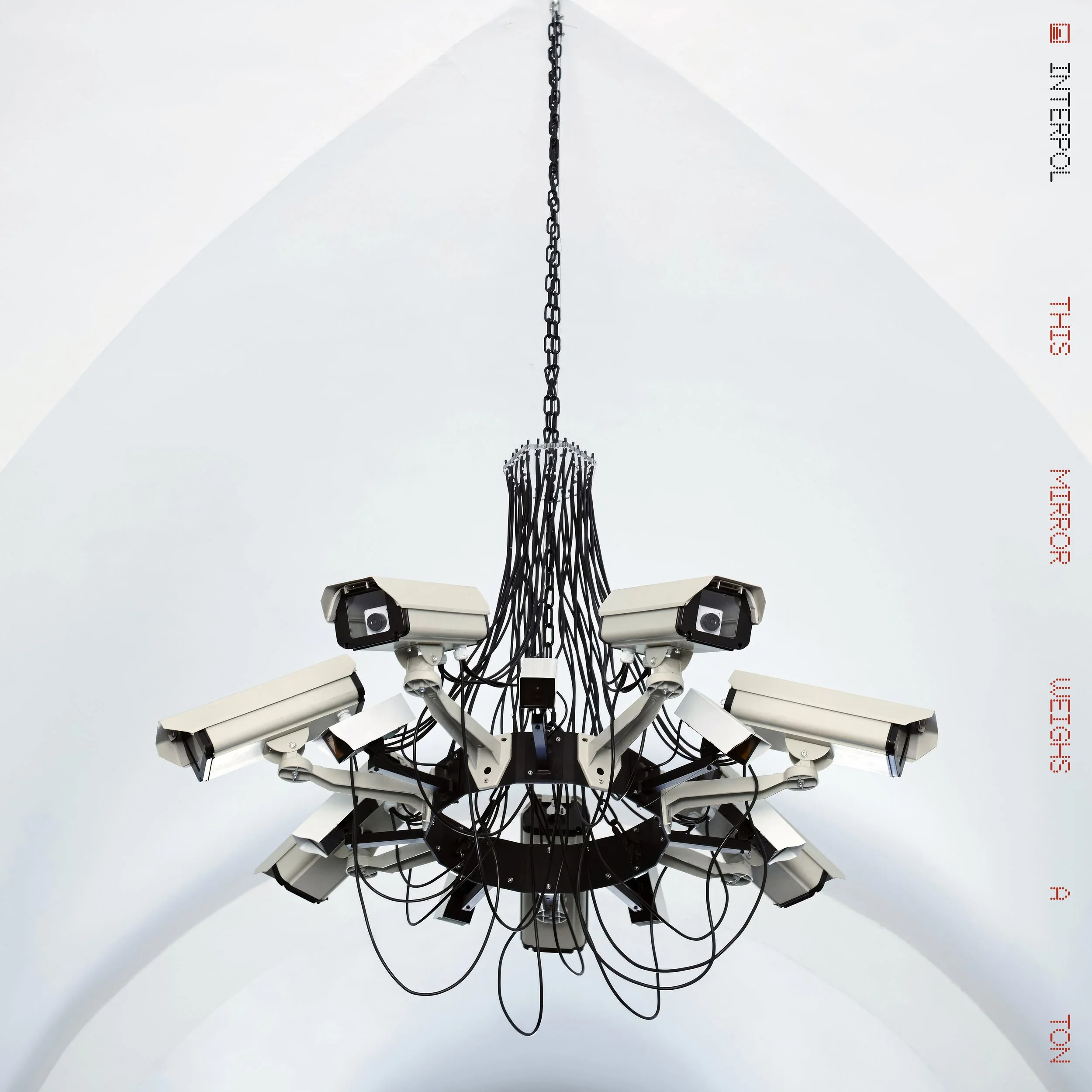
This Mirror Weighs A Ton album cover
Interpol have always known how to open an album perfectly, and this new release is no different. The title track “This Mirror Weighs A Ton” is mixed in a way that swells and moves between spaces upon listening. It highlights this angelic, “the sky is opening up after a cloudy day” feeling, which is emphasized by the soft drums, Paul Banks’ pulled back vocals, and his partner Juliet Seger-Banks’ beautiful, wispy voice in the background.
We jump right into the signature Interpol sound with “See Out Loud”, bringing the first appearance of rock into the record. This track holds a very welcomed surprise, as guitarist Daniel Kessler takes control of the microphone for a verse here. The instrumentals themselves are classic Interpol, reminiscent of the sound on their first album Turn On The Bright Lights. Guitar and bass heavy, this is the Interpol we all know and love.
Moving into “Iron City”, Banks starts this one out by himself with just sounds of nature in the background accompanying his voice. Quickly, the instruments join in, creating a hazy, almost nightmarish environment with the piano in the back. These choices perfectly align with the song, as it dwells on this post-enlightenment age we live in, fueled by rising technology and artificial intelligence. Banks contemplates the growth of AI, and how it may one day replace all of us through heavy lyrics. Seems pleased to take us out, he says as he thinks about his family, and the lack of care AI has for them and their future. The words I was here before you can’t use me anymore I have saved your life and I left you there, inspired, speak to the ways in which AI uses and reproduces what has already been made; using old material to create “new material,” but what happens when this runs out? When everything has already been recycled? Banks ruminates on this cycle, and concludes that after going in loops for so long, the end products will lose all meaning because they are just the same source material chewed up and spit back out. AI needs us to create, is the final verdict. We, however, do not need it.
“Wounded Soldier” takes on a new sound for the album, as it, ironically, feels a bit more like a dance track. The guitars, keyboard, and electronic sounds in this one instinctively make you want to move, until you really dive deeper into the lyrics. The heavy bass at the front of the song adds to this weight the words carry: And I dream violence Hear a hive of million wings Haunting me I run hopelessly Run aground like I’m burrowing Hug my knees now I made my peace. Banks comments on the current worldwide political climate and violence in this one, more specifically the Russia- Ukraine war. Due to this constant connection to the media, we are all watching wars and brutality play out in real time. Through these lyrics, he contemplates having to live with that weight, and viewing these scenes on our screens, powerlessly.
As said before, this album was full of experimentation for the band as they added new sounds and features to their songs, bringing an entirely new feel to their discography. In “Ever the actor”, the song lives in this dark, moody environment complemented by a range of instruments and breakdowns. The dramatic switch in feeling towards the end gave me a sense of excitement, as it marked this sort of physical shift in the song. Strings enter in after this little break, gradually guiding us out of this track and into the next. These same strings return in “Bird and The Serpent”, another track where the band play with mixing sounds as they combine a classic rock sound with experimental features. The group adds a woodwind section to the ending of this song, giving it a new life and atmosphere.
In all honesty, “So Rides the Reindeer” caught me off guard; the techno beat in the intro had me thinking the record had switched off for a second. As the song continued, it grew on me more and more, as it showed a new side to Interpol, almost a more modern one. With the rise of electronic and dance music, I love seeing a rock band like Interpol try their hand at it, while adding bits of their signature sound to it. We get this through Banks’ lyrics Oh, understanding replaces faith Drunk on my pain Oh, surround me Potions I take To creep up the mountain Up is down Tonight we drown, as his classic grim lyrics contrast the weightlessness of the instrumentals.
“Darling Thoughts” picks up the pace a bit as it brings classic rock back into the mix, while still keeping it interesting. There is a hint of a synthesizer at one point in this one, filling the space between the guitars, bass, and drums in a fun way. The end of the song grows and expands, leading perfectly into the next fast paced track, “Wake Up”. This one brings a different energy to the track list, as the rushing drums cause this sense of urgency. The use of bongo drums on this one give it a new sound, one that is lively and again, perfect for dancing. We fade out to a shimmering guitar, with all of the instruments going dull until we enter the next track.
A strong piano opens this one up, bringing an elegant power to “Enemy”. The ethereal, dreamy female vocals return on this one, providing a stark contrast between the lyrics and the sound. The bass gradually joins in, extending this space and making it deeper as dark lyrics like End of day I’ll be dancing On your grave Another double imposing What did you want me to save intensify this feeling.
Closing with “Sudden”, Banks’ voice echos and sways in the background bringing back that hazy, disorienting feeling that was heard at several points throughout the record. It’s melodic and soft, returning to the original form in which the album started in the first place. It looks into a relationship, thinking about a distance that seems shocking and sudden externally, but has actually been lingering for quite some time. Differences between people cause this drift, but the singer says this has been a long time coming, confessing This is not sudden to me. A perfect closer for such a weighted and experimental album for the group; they picked the right track to end this contemplative journey.
Overall, I really enjoyed this album and everything the band had to say about modern issues and the current state of being in this complex world. I appreciated the ways in which they experimented with their sound in order to have these conversations in ways that felt fitting to each situation. Interpol has been, and always will be, one of the best contemporary rock bands and this album reinforces that notion.