
“Some Things Never Leave,” So Hopefully Annabelle Dinda’s Here to Stay
After incredible success on TikTok with her single “The Hand,” singer-songwriter Annabelle Dinda’s album Some Things Never Leave quickly became a highly anticipated release. Approaching headstrong with brazen lyricism and the vocal grit of powerhouses like Alanis Morissette and Hayley Willaims, this newcomer clearly showcases the songwriting chops to destine her for success. From raw guitars, to shaky tambourines, to tasteful fiddles and strings, Dinda brings a refreshing loudness and assertion to the notoriously soft and meek singer-songwriter genre, blasting us back to an early 2000s, unique, alt-rock folksy sound.
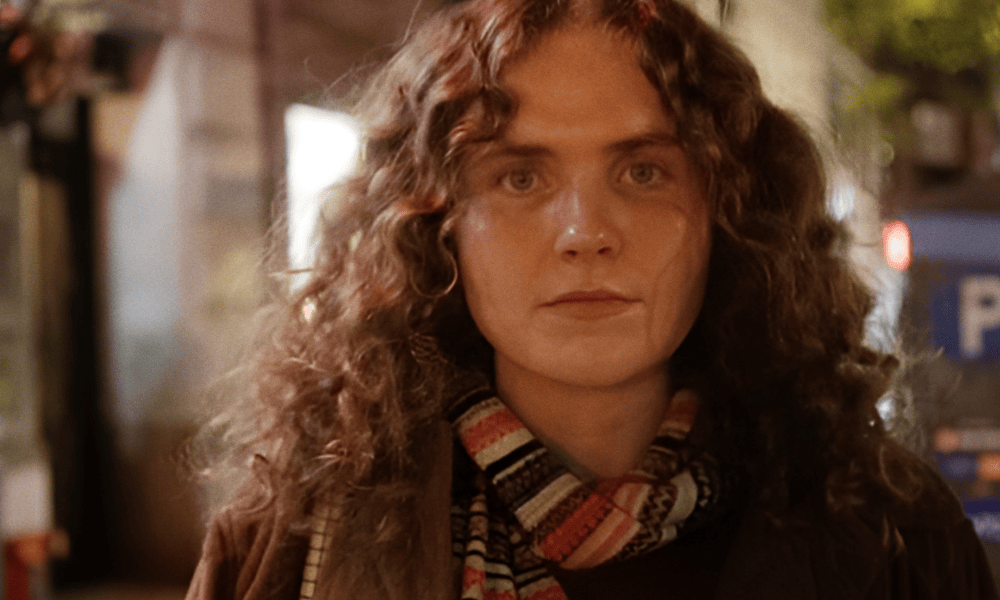
“Big News Day” screeches us into the album. In true Annabelle Dinda fashion her melodies string words together in a breathless droning, pulling us through the song. The bridge grows really well and bursts us into one more repetition of the chorus’s “people are boring mantra”. Everyone but you, Annabelle.
I love the hollow drums in the chorus of “Cosmic Microwave Background”. In the verses her voice sits at the very back of her throat at the lowest part of her register, and in the depths you can hear her smirk through her words. She dips for a quick second into some staccato ha-ha-has that are very solo Hayley Williams-like and then the song is over too soon.
“Doesn’t Matter” has the same cadence and tone of one of those classic early 2000s alt-rock sounds like “Chasing Cars” by Snow Patrol, or a broader The Fray, but she adds this slightly more eerie building, akin to a more mellow Evanescence. The intriguing conglomerate of early 2000s influence makes this one one of my favorites of the album. However, I did feel the chorus would work better as a prechorus and I wish the chorus could’ve had a more grunge release.
“Satellites” was another song snippet that went viral on TikTok prior to its release, due to its incredible opening line “Your dog just bit me but I know he didn’t mean it//why does every good intention tend to need me to believe it.” Nowadays dog motifs in songs risk being overdone and consequently uninspired, but somehow Annabelle manages to make it fresh and revives the poeticism of the analogy. While a lot of her lyricism’s success is absolutely attributed to the words themselves, the melody’s incessancy and her piercing inflections often help weigh her words. While this is applicable to the whole album, this song is a captivating paragon. Everything about this song is beautiful.
“Everyone Likes To Be Forgiven” instantly has some Williams-type experimental vocal layering and drum patterns. A hollow snare and her vocal stems spearhead the song’s production, but the snare is a little too forward in the chorus and is borderline distracting. While the drum part itself could be very complementary and has some really creative fills and cymbal utilization, it sounded as though the drums were fighting to the front of this song.
“Gunpoint, Headlock” is a mix in energy of “Satellites” and “The Hand,” so naturally it’s one of her strongest lyrically and sonically. The song is reflective and reactionary, honest in her visceral apprehensions and trepidation. The sound helps represent this as the chorus builds to a belt and later the bridge pulls up the instrument’s pitch haphazardly and crescendos into a harrowing but resolute song climax. This one is a beast vocally with little room to breathe and constant sliding in and out of phrases and notes, a cadence Dinda has truly made her own.
“The Hand” follows and, without fear of giving a based take, this song is truly a standout and an objective best. There’s some famous notion that claims the best songs sound like they’ve existed this whole time, and “The Hand” is the perfect example of that; it’s so good it’s innate. It not only embodies her sound perfectly, but equally encapsulates her mantra as an artist. Here, Dinda asserts herself as a loud, raw upstander to female passivity and suppression, the melody and instrumentation relentlessly unabating as a perfect sonic aid. While keeping her artsy-90s/2000s soft alt-rock grit, she manages to create a song that feels truly monumental but accessible.
“To Reconcile” is much softer compared to the fervent prior. Its light piano is pensive and very The Fray sounding, and Dinda enters the song with a solemn contention. This is an incredibly underrated track.
“The Body Remembers” has some really interesting sound leveling and instrumentation. It seems a simple enough song, each instrument entering gradually with guitar to start, then bass, then drums. But the drums seem to hesitate to come in, and it seems the song tries to build, then pulls back, then neglects to ramp back up adequately. The layer of strings comes in nicely, but it still remains slightly inconsistent from there on out. Additionally, even when the instruments are at their fullest, the vocals overpower the piece. Lyrically this song is incredible, but the production falters the whole. I’d love to hear this one live.
“London Plane Tree Grow in Philly” closes out the album with a deep tone to the instruments. This song is an incredibly poetic resolution about scatteredness and grounded nature, resolving the album on a really introspective note.
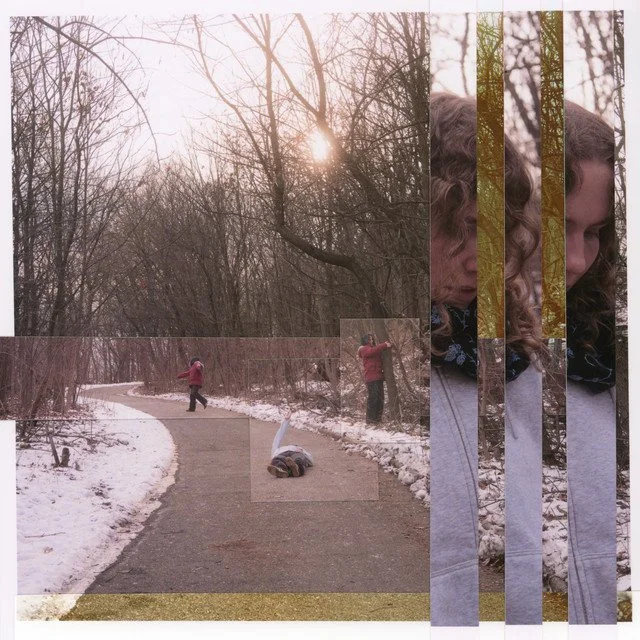
“Some Things Never Leave” album cover
Annabelle Dinda is impassioned and sustained by writing, and this remains clear as she herself bleeds and bursts into Some Things Never Leave. This album revolves around imperfect honesty, resilience, introspection, and unabashed self-assertion. Her sound is unwavering and interminable, her voice is charged and expressive, her inflections are perfection, and the instrumentation coddles it all to a stylistic exemplariness. Dinda takes the singer-songwriter genre and reclaims the voice in it, demands her melodies be belted rather than whispered, writes unapologetically crass rather than heartbroken and small, and leaves you no room to breathe with her melodies. This is her fourth album and by far her most established sound yet, but the production needs to make sure it can keep up with her voice and her lyricism. The instrumentation is often simple enough and sonically intuitive, so while it works incredibly well for her, the next step Dinda should take is solidifying a fuller band to back her up, much like Lizzy McAlpine was assisted in Older and beyond. Finally, with her writing and vocals being her strongest suit, it’s sensible that the vocal layers are pedestalled, but better sound-leveling production helps support her strong voice, rather than leave it jutting out sometimes awkwardly. Some songs like “Satellites” and “Gunpoint, Headlock” had this down perfectly, while some like “The Body Remembers” or “Everyone Likes To Be Forgiven” just slightly missed the mark.
If the biggest sin this album holds is that her voice is too forefront, I’m ultimately alright with it; everything this album conveys insists Annabelle Dinda demands to be heard. With a voice like that and lyrics that have me in full literature-analysis mode, I hope Dinda continues punching out songs and rounding out her instrumentation and production to prove herself right in that Some Things Never Leave.