
Stepping into “Dopamine Chamber”: Fontaines D.C.’s Critique of the Modern World
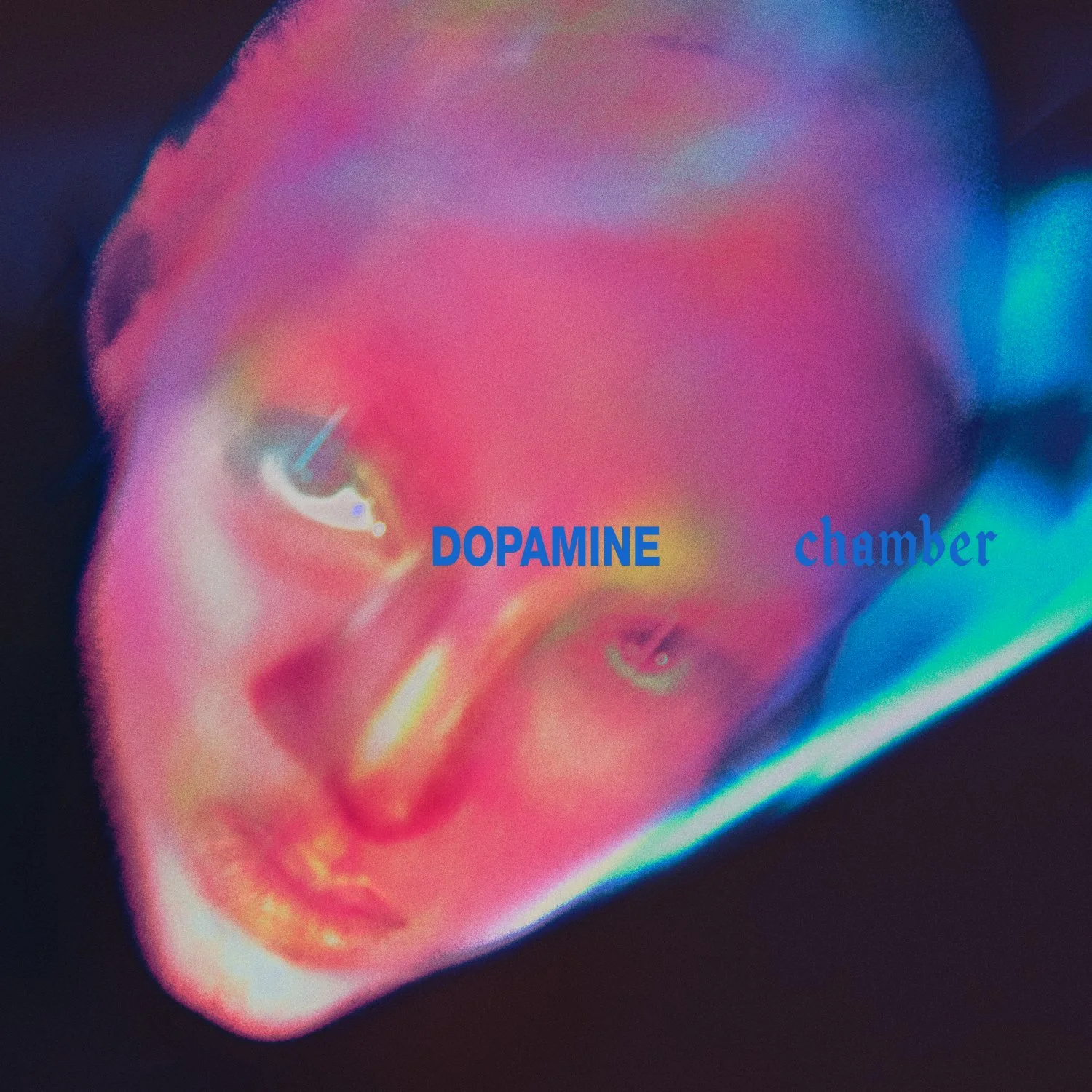
Dopamine Chamber album cover
Arguably one of the most exciting, thought-provoking, anticipated albums of the year, Fontaines D.C. have released Dopamine Chamber, their fifth studio album. The band try out new sounds on this one using synthesizers and experimenting with genres to fuel their critique of the bleak world we’re living in.
The record opens with “Six Shot Morning”, the song I was most excited to be released. I got the chance to hear them play it live recently at Shaky Knees Music Festival in Atlanta, and it was unreal. When the synthesizers began, the crowd lit up. Their bright sounds work beautifully alongside frontman Grian Chatten’s dull vocals, carrying us to the song’s energetic drop. It’s explosive– comparable to the plethora of media we consume every time we open our phones, which Chatten said the song wanted to highlight. He was inspired by the range of content we are bombarded with upon logging on to the internet: from war footage to the latest meme, it’s a jarring spectrum. “It is quite grotesque, being able to self-prescribe dopamine through your phone. There’s a poignant sense of us being on the brink of some other kind of form of humanity, or non-humanity,” Chatten said. This sense of despair is undeniable when you listen to the world they’ve created–or rather mirrored–throughout the record. There is an undeniable energy that emits from this one, which appropriately sets the tone for the rest of the album.
The album’s lead single “Marianne” was the perfect way to introduce this new era of the Irish rock band. It has traces of their last album Romance through the droning sounds and chimes in the background, alluding to a dream-like state, however this is quickly turned on its head. Once Chatten starts singing, the lyrics become warning signs, emphasizing the need to get away and escape the world, and what it has become: “This year, you should come and stay here/ You can follow my lead/ I can help you disappear.”
As soon as I heard “Mimesis” it instantly became one of my new favorites by the band. They showcase a new sound in this one, leaning more towards 80’s pop with their instrumentals: bright, upbeat synthesizers and guitars, and a bass line that’s light and airy, compared to that of “Tongue” which is intense and aggressive, completely taking control of the track. I’d consider this one a true dance track– Fontaines D.C. style.
I had a similar immediate reaction to “Happy for You” as I did “Mimesis”. The dark, droning strings lure the listener in to the tune; their reverb effect combined with Chatten’s dreamy vocals is magnetic. The way they decided to contrast this softer opening with the absolute banging of drums after the second chorus was startling, in the best way possible. This switch up allows the song to lean more into a 90’s grunge category. I think another reason why it’s so effective, and why the album as a whole is so compelling in its intent of being unsettling and eye opening, is because we are never truly relaxed while we listen. Either through pointed lyrics or clashing instrumentals, the band always wants us on edge, which I’d say they managed to do masterfully.
“One Man” is a track that breaks the mold the rest of the track list adheres to, at least thus far. Another must-listen on the album, this one swells and adds in instruments, like an acoustic guitar, rather than crash and drop when you most expect it to. Violins close this one out with vocals in the background singing “La La La La”, their ethereal nature sounding like another instrument in the mix. The light environment of this one is emphasized through the kids’ voices we hear at the start and end the tune. They make us hopeful as we hear their laughter and sounds, until we remember where we are and what we’re listening to. Then they act as ghosts living in the recording, haunting us and the decisions we’ve made that have already written their future.
One of the main attractions to this album, and what surprised many fans, was the announcement of their first collaboration which happens on “Where Is Gone” with ROSALÍA. At first, I was unsure of this combination, however, those concerns quickly faded away as I listened to the track. The feeling of this one is similar to that of Nancy Sinatra and Lee Hazlewood’s “Some Velvet Morning”: entrancing and addicting. The pair’s vocals complement each other beautifully, yet there is a melancholy that surrounds them.
Reportedly, the band wrote around 40 songs for this project, but the 11 tracks they went with impeccably built up this message and world they wanted to encapsulate through Dopamine Chamber. Closing with “Intimate”, the previous urgency and feeling of alarm returns, prompting the listener to continue thinking about our dystopian reality long after the last note rings out.