
Funk did not just define the sound of the 1970s, it laid down the groundwork for hip-hop and modern music culture we know today. The influence they had was so massive that understanding music today requires us to look back on how George Clinton and his group first built funk! As we take a trip on the “Mothership”, we will learn about the pioneers who started it all.
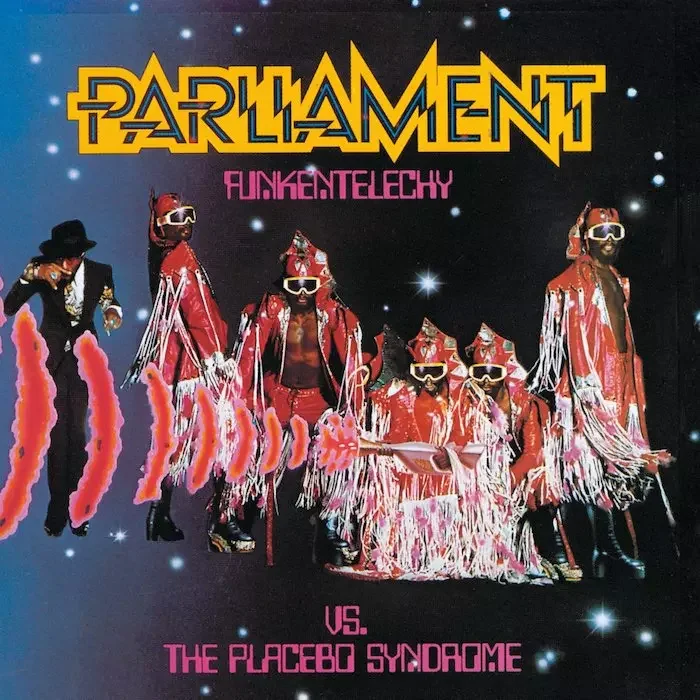
Parliament-Funkadelic was a massive group of performers who helped influence the crazy style and sound of the 1970s. The original members of this group were George Clinton, Raymond Davis, Calvin Simon, Fuzzy Haskins, and Grady Thomas. They would eventually go on to add Michael Hampton, Bernie Worrell, Billy Bass Nelson, Eddie Hazel, Tiki Fulwood, Bootsy Collins, Fred Wesley, Maceo Parker, Jerome Brailey, Garry Shider, Glen Goins, and Gary Cooper. The band used a variety of different sounds to help create the Funk. Parliament combined the rock of Jimi Hendrix, the rhythmic sound of James Brown, and the style of Sly and the Family Stone. Mashing all the styles and sounds into one helped create P-Funk. P-Funk is more than music, funk is a culture, an aesthetic, and a lifestyle. P-Funk has a saying “Give up the Funk” meaning self fulfillment and transcendence.
Parliament originally started as a doo-wop group in the 1960s out of Plainfield New Jersey, their first hit in 1967 with the song “(I Wanna) Testify” in 1967. This hit single led the group to go on tour but problems with the record label at the time led to the loss of the group's name. As the band was going on tour and performing throughout the northeastern United States, they started to emphasize more of the funk side of their group and incorporated the sound of psychedelic rock into the mix.
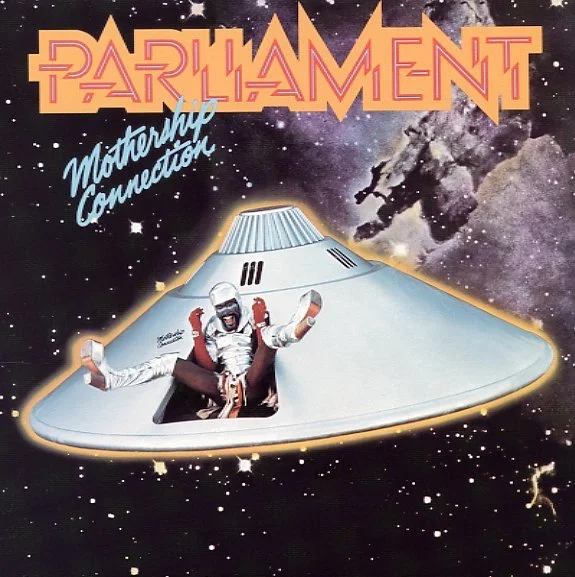
After George Clinton was able to regain the Parliament name, he started producing albums for both groups, Parliament and Funkadelic. Parliament focused more on the funk/R&B side, and Funkadelic focused more on the rock side! In the process of doing all this George added more performers who were all recruited from James Brown J.B’s band. The performers would be Bootsy Collins, Fred Wesley, and Maceo Parker. Along with the recruitment from the J.B’s band, he also added Jerome Brailey, Gary Cooper, Michael Hampton, Garry Shider, and Glen Goins. Big success finally came for Parliament in 1976 with the release of the Mothership Connection. The album also featured the hit single “Give Up the Funk (Tear the Roof Off the Sucker).” This was then followed by other smash hits like “Flash Light" by Parliament, “One Nation Under a Groove" by Funkadelic, and “Atomic Dog" by George Clinton.
P-Funk eventually reached its peak toward the end of the 1970s, with over 40 performers, before coming to an end around the start of the 1980s. The overhead costs and having multiple groups eventually led to the end of the groups. Even though the groups ended, that does not mean they did not have a major impact on music. P-Funk defined dance music at the time and influenced different sounds from hard rock to house music. The catalog that they developed has become one of the most sampled among rap producers. P-Funk was eventually inducted into the Rock and Roll Hall of Fame in 1997, and around 2011 the album Mothership Connection was added to the National Recording Registry. This registry is for music and audio recordings that are deemed culturally, historically, and aesthetically important. In 2019, P-Funk received a Grammy Lifetime Achievement Award.
Even though the golden era of Parliament Funkadelic was over 40 years ago… we still are living in their universe. From the fashion of modern stars today to the crazy baselines we still hear in today's rap, P-Funk's influence is everywhere. P-Funk's mark on the culture has faded. They became part of the culture we know today. George Clinton promised that he would “Tear the Roof off the Sucker," and as we look at music today, we can definitely say that they have never put the roof back on.