
“Girl EDM” and the 2020’s Rise of Feminine Electronica
How many women in EDM can you name between 2000 and 2015? I was deep into the genre, it was all I would listen to from about 2012 to 2017, and after wracking my brain, I can only name one and a half female artists from that time. Alice Glass of Crystal Castles has definetly gotten the attention she always deserved now, but as far as the mainstream goes, I can only think of Ellie Goulding’s pop-focused work. She was amongst the EDM-ification wave of pop I followed at the time, but from this period, I can name Calvin Harris, David Guetta, Diplo, Tiësto, Benny Benassi, Alan Walker, Steve Aoki, Skrillex, Zomboy, Headhunterz, Kygo, Armin van Buuren, Dmitri Vegas, Like Mike, and perhaps the king of 2010s EDM, Martin Garrix. I can certainly name more artists just by going through my old playlists, but my point stands, this was an especially male-dominated scene. It wasn’t alone, but unlike rap’s female standard-bearers of Missy Elliott, Lil Kim, and Nicki Minaj, or the Rock presence of Hayley Williams and Amy Lee, mainstream EDM was lacking a female touch for a long time, something which has dramatically reversed in the 2020’s.
Now, with the roots of EDM being forged from the remnants of disco, EDM as we’d call it now was at least somewhat egalitarian at first, but as the 90’s progressed, the usually female role of “vocalist” started to be minimized in favor of the producers behind them, with vocalists being interchangable if they were even credited. This was popular to do especially in the Euro scene into the ‘00s, though vocalists did start to get credited more in the 2010’s, to the point where artists like Bebe Rexha started to be able to carve out good careers for themselves. This has certainly changed though, to the point where female-fronted, or feminine, EDM has become its own scene, and it has a lot to do with an Australian DJ with a unique visual flair.
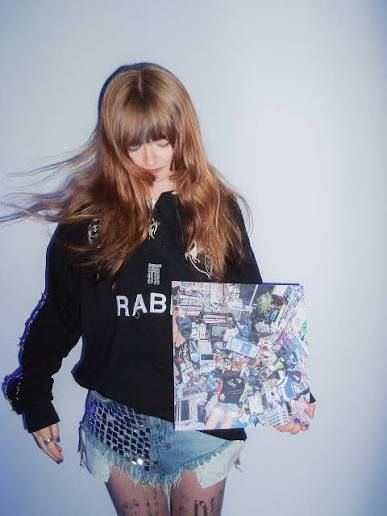
Of course, CharliXCX was likely the first mainstream female EDM artist in this new wave, starting around 2016. She built upon SOPHIE’s intense underground presence that coalesced around three years previous. The specific “Girl EDM” subgenre I wish to focus on formed in the early 2020’s. Ninajirachi first started getting traction in her home country around 2017, and kept grinding out her unique sound, with layered, overlapping synth tones and complex modulation, with EP after EP until what I believe to be the true inception of the genre, 2024’s Girl EDM, her fifth EP (shocking, I know). By this point, the “Holy Trinity” had all reached their current form, with Jane Remover, inventor of the “dariacore” microgenre, and Underscores releasing their first albums both in 2021 and their second albums in 2023. However, I wish to make a distinction that once the popularity reached a critical mass, Girl EDM became its own scene, different from the hyperpop that came before, just as hyperpop is a different scene to the PC Pop it spawned from.
Image via Instagram
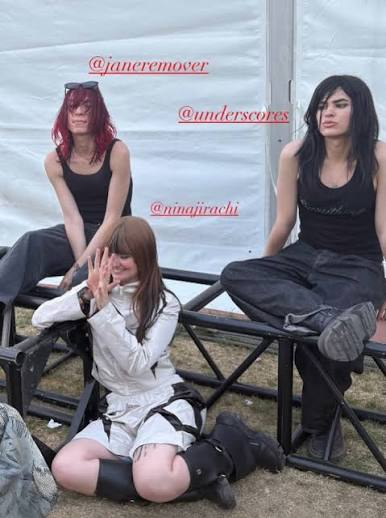
Image via Instagram
It is remarkable how Girl EDM manages to be so wide yet so cohesive. Jane Remover comes from a more rap-influenced direction, Ninajirachi employs incredibly complex and layered electronic instrumentation, especially in 2025’s I Love My Computer, which contrasts with Underscores’s U from this year, with its much more stripped-down and tightly controlled instrumentation. These artists should only barely be in the same genre, yet their fans overlap to the point of them being named the “Holy Trinity”. There is some sort of intangible factor, perhaps femininity, that makes these artists just….work together. There is far more than just the Holy Trinity though, and with the ease of digital musicmaking, many people inspired by SOPHIE, 100 Gecs, and even early Ninajirachi have started to make their own waves, just as the Holy Trinity took inspiration from Porter Robinson, Madeon, and Skrillex.
If you are a fan of this genre, I would recommend:
Femtanyl taking a rap framework and dialing up the digital chaos to 11
Astrid leaning into an emo-bubblegum vibe with her newest project, Sucker
FEM&M’s “genrefluid” digicore-hexd-dariacore pixelly mess
ISSBROKIE/shteppi keeping more in line with contemprary underground rap, something she has become rediculously good at
ALT BLK ERA injecting a British DnB flair
Slayyyter’s club-pop-industrial mega-smash in last year’s “Crank”.
Though these artists may or may not necessarily fall in line with the Girl EDM moniker, there is something to them all that causes them to exist in each other’s orbit, something that was missing from EDM for most of this millenium, and I believe that is femininity. From being the main focus of one’s work to just a little twist added in, all of these artists are united in having some femininity as an aspect of their music, and no matter the persuasion, it always adds something new, which is always an improvement. Long live Girl EDM!
